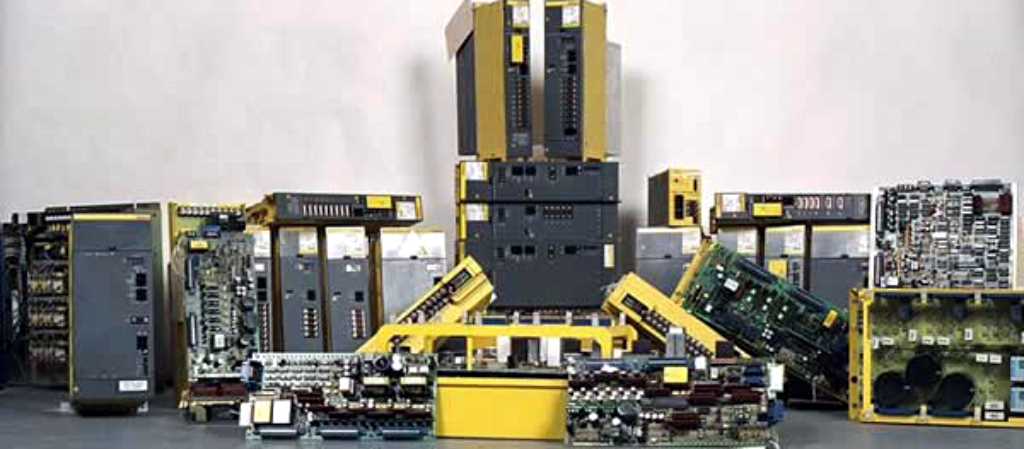
Originally repairing Fanuc electronics from the mid 1980’s our founder has repaired and retrofitted CNC machine tools fitted with Contraves, Fanuc, GE (General Electric), GEC, Indramat, Mitsubishi, Philips, Siemens, SEM amongst others. Due to the burgoning prominence of Fanuc within the UK machine tool industry and GEC ceasing Gemdrive controllers. Repair of Fanuc electronics started in the late 80’s with DNC Electronics later emerging.
Wiser engineers still active within CNC machine tools industry observed Fanuc’s design philosophy evolve producing tighter precision at higher speeds and energy efficient.
This article follows Fanuc from 1970’s onwards when it became independent from Fujitsu. Focusing on electronic servo and spindle drives. Starting with the thyristor based DC servo and spindle units.
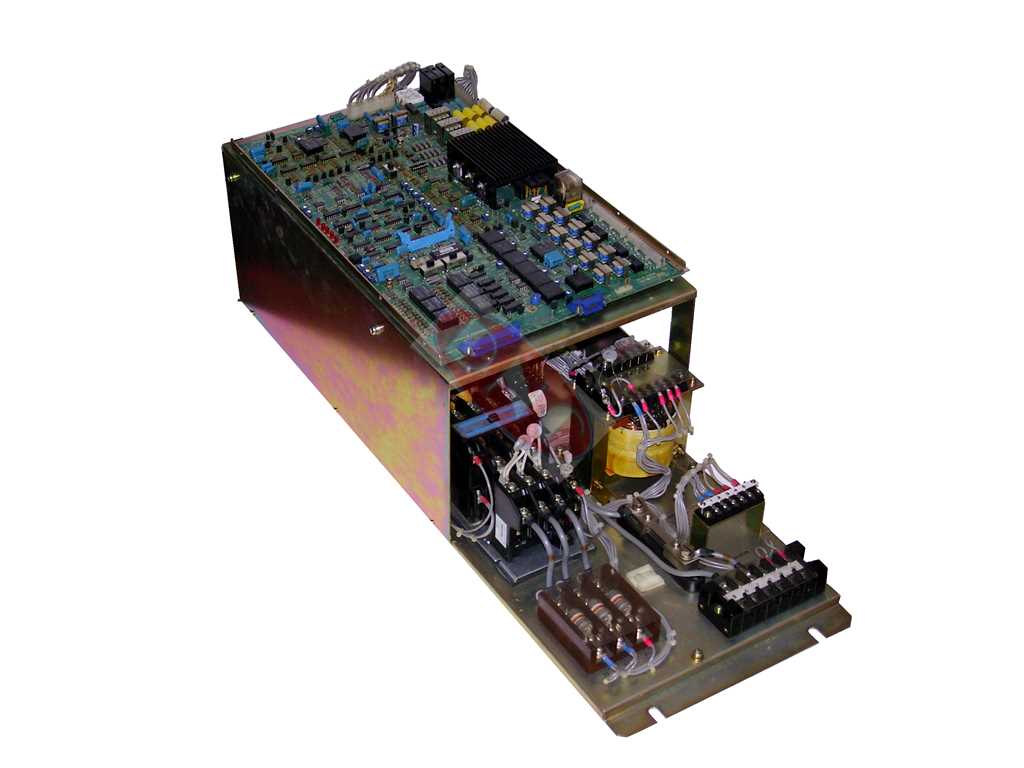
Fanuc DC velocity control unit and spindle (1977 ~ 1982)
Fanuc DC servo spindle unit. This drive was fun to fix. With 14 * PC-06 hybrids at $90USD each and no way to figure out which was failing – the best route was too replace the lot. Notorius for failing! No longer supported.
N series DC thrysitor velocity control units powered black cap Getty’s Fanuc motors with tacho, resolver and/or encoder for closed loop machine control. No longer supported
M series DC transistor based units drove the YELLOW CAP servo motors. These drives were self contained velocity control units with either tacho or encoder feedback to the CNC. Fanuc introduced the DC dual axis drive with two channels driven by one amplifier. Still support these DC axis drives.
Famously the advent of FANUC’s red cap motors! Signalling the transistion from DC to AC brushless servo and spindle motors allowing lighter, more compact motors and drives due to more efficient control over variable speed. There were three main interface technologies of this era. Namely analogue, digital and later serial control.
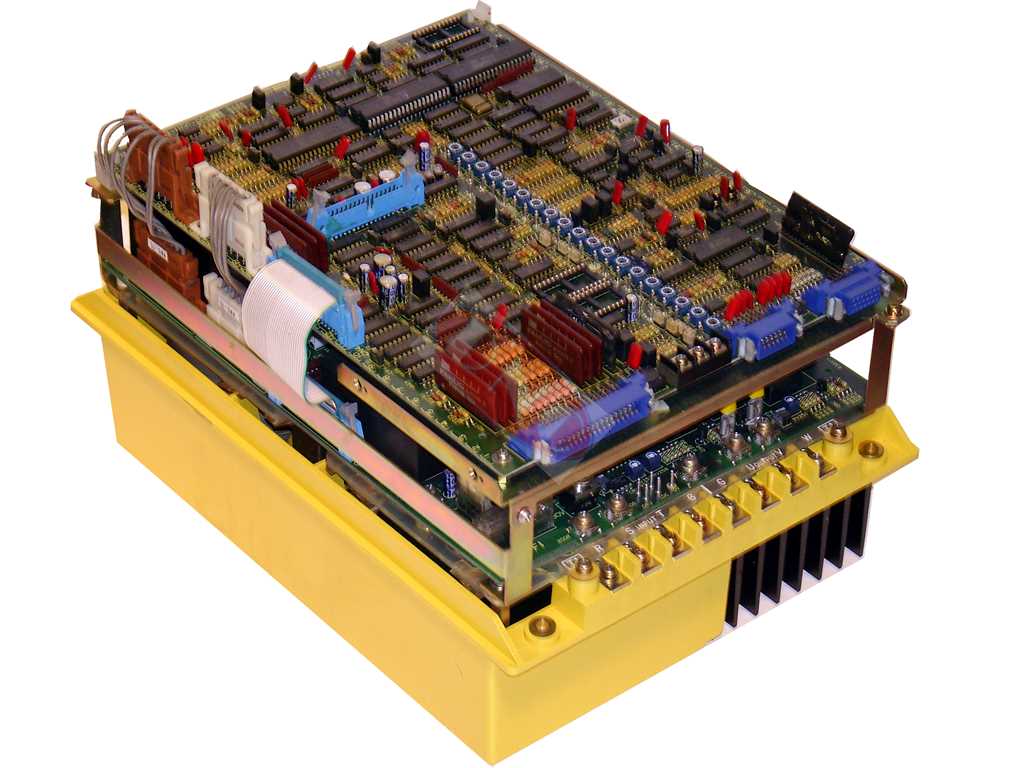
Analogue (Analog) interface between Fanuc systems 6, 10, 11, 15, Zero model A and anodised metal framed axis and spindle drives. However as illustrated Fanuc introduced their famous yellow (RAL: RAPE SEED) plastic molded frame. Colour still in use today. However most of the analog drives were anodized metal framed. CNC controls used LSI chips on the masterboards to control the analogue drives.
Common to Analog DC and AC velocity control units were 185volt 3phase input to the power section and 18v into the control PCB. Fanuc’s 1st generation of digital servo amplifier unit also used independent 18 volt supply to the axis control PCB.
Start of Fanuc’s infamous yellow plastic frames / cases:
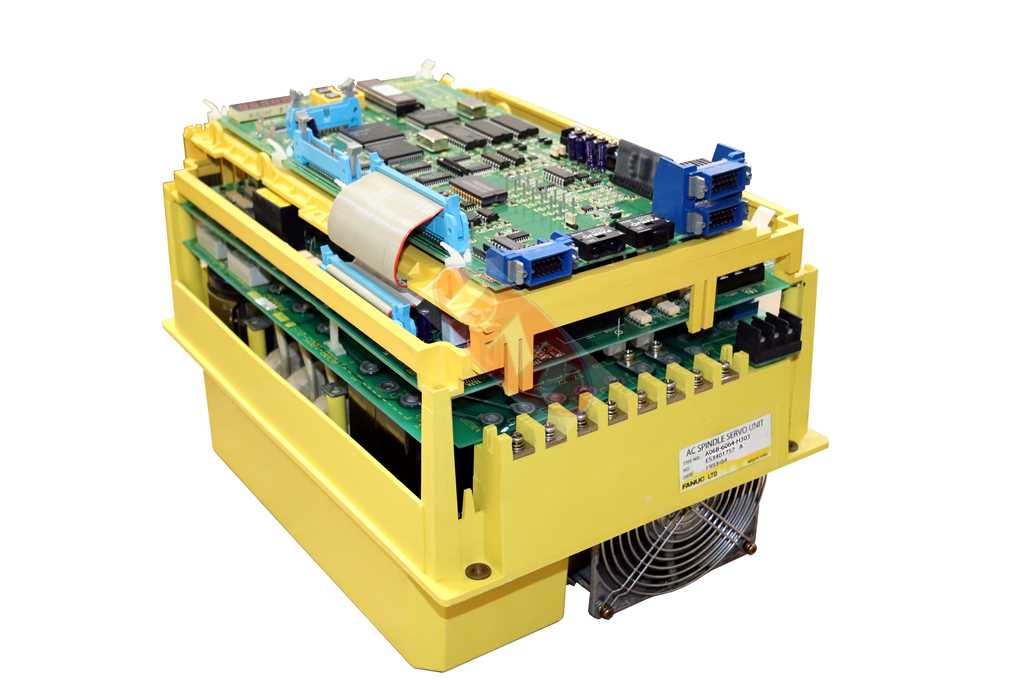
Not really drawing back to the all those anodised analog units and a a pre release analog small AC spindle drives were fitted into yellow cases. The frames were nasty and used to splinter when being taken off machines or shipping, as the structure was a bit of an afterthought.
However the proper start of yellow framed drives also symbolised digital control over both servo and spindle drives together.
Mentioned earlier Fanuc did release an early AC servo amplifier unit. However Fanuc’s digital generation of AC drives got going with the release of the S Series of servo amplifier units and spindle servo units. With a matching set of S series AC servo and spindle motors. In its first iteration being 16 bit from system 0 A, B and C, 15, 16, 18, 21 controls. Followed by 32 bit architecture from 0-C, 15, 16, 18 and 21 controls. There were sub series such as the P for punch and I series amps which featured no sensor within the spindle motor.
Common to the digital and serial generation of Fanuc drives were the yellow framed drives.
At the start of the 1990’s Fanuc released its 1st generation of serial interfaced AC spindle servo units. With systems such as the system Zero model C and D and 15,16,18,21 controls with serial LSI interface capable of control. The serial drives are a pre-cursor to the following generation of drive series.
At this point servo amplifier units were digital interfaced and spindle drives were utilising serial interfacing.
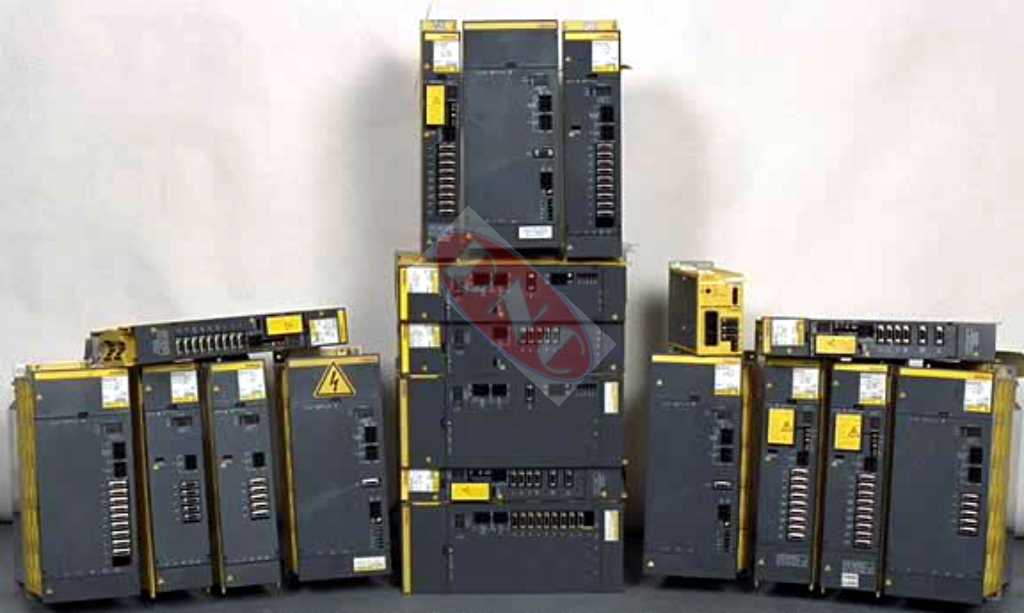
Simplified Fanuc created the ALPHA series mainly 200volt AC for higher end machining with 400vac high voltage for countries requiring different rated machines. BETA was the lower smaller rated servo units for low end machines or for auxillary functions as it could run PWM digital, FSSB fibre optic and I/O link.
ALPHA power supply module – The source of power to the rest of the ALPHA drive system. This module takes incoming 3phase electrics from contactactor and rectifying and smoothing into a DC bus voltage powering the ALPHA spindle and servo amplifiers. Incoming voltage is dependent on the PSM being a 200VAC (200V to 230V) or 400VAC (400V to 460V) model. The output DC bus voltage alters from 283V-325V on the 200VAC versions and the high voltage 400VAC from 565-651VAC. The 200VAC version of all ALPHA modules were vastly more popular than the high voltage version.
Fanuc ALPHA/Beta modules and units were controlled by series 0, 15, 16, 18, 21 and later i series 15i, 16i, 18i and 21i as well their open CNC versions 160i/180i/210i systems.
ALPHA spindle amplifier module – Controlling the spindle motor for the various type of cutting, drilling dependent on the function of the machine tool. As above the 200VAC covered outputs from 2.2kW to 69kW with the 400VAC high voltage versions outputting 13.2kW to 82kW. Connection was hardwired either direct from the control system or via a optical I/O link fibre optic converter.
ALPHA servo amplifier module – Controlling the servo motors of the machine tool allowing actuation of the machine tool across its many axes from simple 2 axis lathes to massive multi-path capable machining centre’s. As above the 200VAC versions covered single, dual and triple channel amplifiers; while 400VAC were single and dual modules only. Earlier versions were type A or type B serial interfaced dependent on whether the encoder feedback went to the drive or control. Fanuc then introduced the FSSB (Fanuc serial servo bus) using fibre optic as it had done in controls; not defacto connection today.
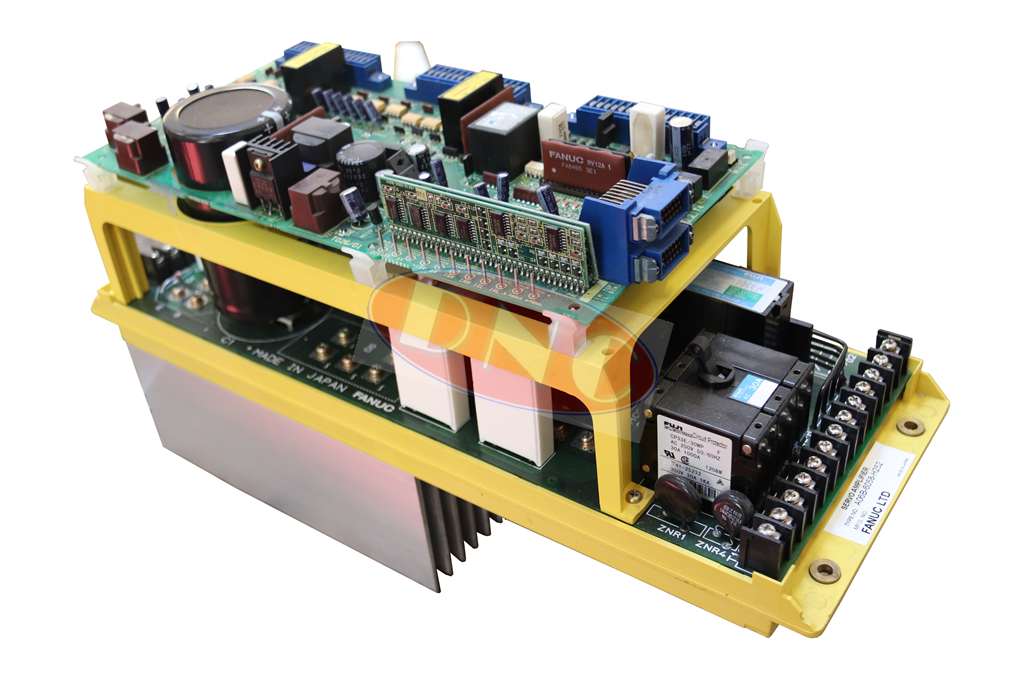
ALPHA servo amplifier unit – Similar to the BETA units, these ALPHA servo amplifier units contain their own power supply section and not part of the above ALPHA modules dependent on a seperate power supply module. Fanuc only manufactured 200VAC versions of these amplifiers with a Type B interfaced series of single, dual and triple channel servo units. As well the ALPHA SVUC which is a backwards compatible amplifier to the earlier non alpha C series as single and dual axes units.
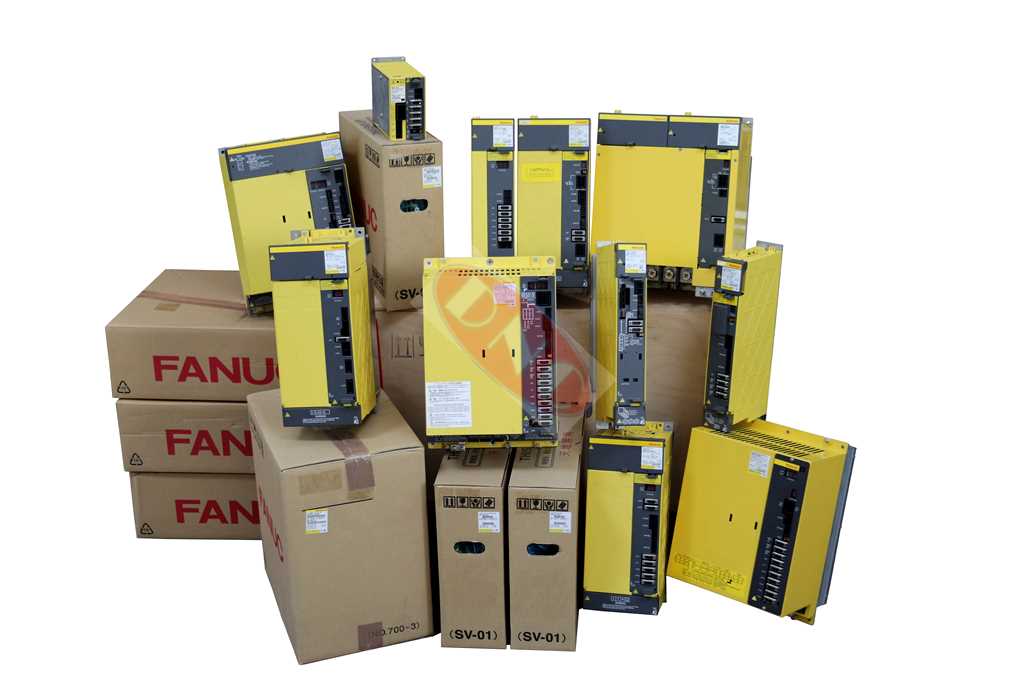
BETA servo amplifier unit – Unique being swiss army knife of Fanuc drive solutions. With inbuilt power supplies the BETA series amplifiers similar to the SVU and SVUC are 200volt drives. These amplifiers normally adorn small machine tools or are fitted as auxillary solutions for motors not integral to machining. All drives from this series are single axis and range from model 12 to 80 powering small BETA servo motors. Interface they offer more than ALPHA, as they support PWM, FSSB and lastly I/O link which is BETA only within Fanuc’s range of drives.
The major change between ALPHA and ALPHA i is the modular design of the plastic. Alpha used a monocoque plastic yellow case in most but the large PSM/SPM drives; The later Alpha i series has plastic panels and sections that clip together. Unfortunately a lot more suspectible to shipping damage.
Fanuc ALPHA i / BETA i series 2004 onwards.
From 2004 saw the advent of the ALPHA i and BETA i series of drives and motors.
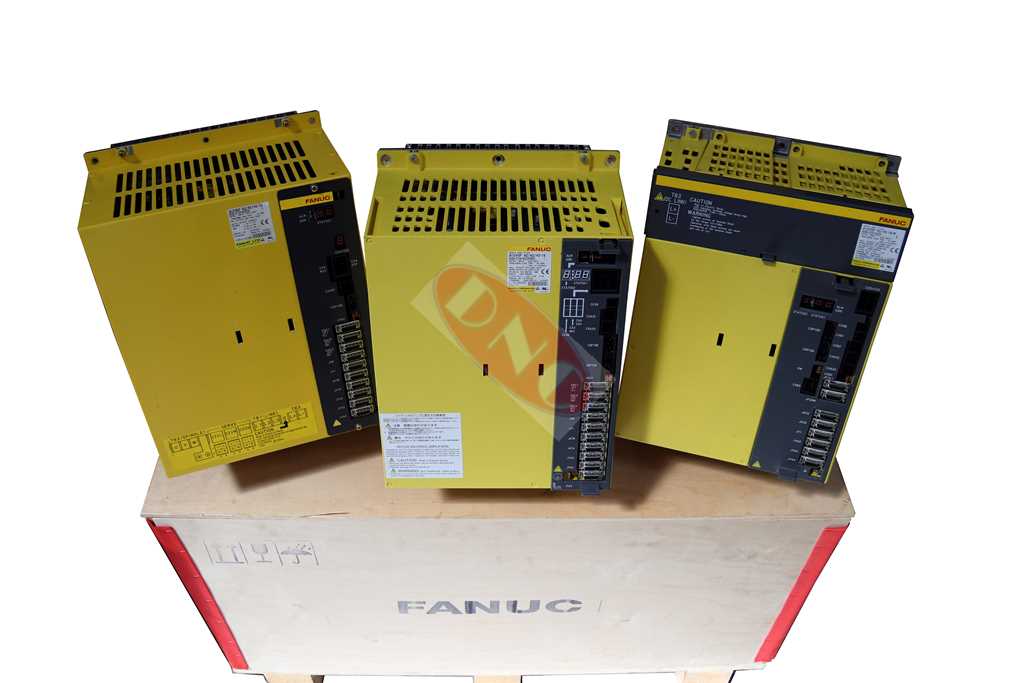
Fanuc released the 62xx series of amplifiers from 2011 onwards. Rather awkwardly they have released multiple versions under the same part number. Overly complicated release structure meaning end users have to be absolutely certain which model they have to hunt for the correct version.
aiSVP servo amplifier. This amplifier similar to the BETA i SVSP is a combined dual or triple axis drive with spindle module. However unlike the biSVSP it doesn’t have a power supply section and requires a seperate aiPS or power supply module. These amplifers were part of the 62xx series of amplifiers.
biSV servo amplifier unit Extending from the original BETA servo amplifier unit. These again are self contained with inbuilt power supply. Capable of running over FSSB or I/O link interface allowing freedom of placement on the machine tool for near infinite applications. As these biSV servo drives evolved Fanuc release dual channel versions. As the BETA i SV units evolved Fanuc also released 400VAC high voltage versions.
biSVSP servo amplifier unit. Combined dual or triple channels of axes control with a spindle with inbuilt power supply. Self contained for the smaller CNC machines and lower end.
biSVSP servo amplifier unit. Combined dual or triple channels of axes control with a spindle with inbuilt power supply. Self contained for the smaller CNC machines and lower end.
These combo drives are now in 3rd series evolving from 6134 series (0i-C), 6164 series (0i-D) and the later 6320 series (0i-F). Evolving power output for the dual or triple servo motors and spindle motors.
Note on the spindle sections of current 63xx series of aiSP, aiSVP and biSVSP amplifiers. They can now be controlled via FSSB fibre optic dependent on control configuration.
Do I need to replace my Fanuc drive!
Replace or get the drive repaired ?
How long is a piece of string. Comes down to how fast you want your machine tool back up and running. Further if the drive is intermittently faulty or the cause of the alarm is not clearly the drive.
Understanding Alarms on Drives ?
Depends on series, type or family. Understanding the difference between drives series is important. Early drives use LED’s that light singular or together next to a number or letter abreviation i.e. HCL or 4+8 = 12. On later drive series they alarm via a alphanumerical code such as 8 or B1. Some drive series only alarm via the CNC i.e. E series and early BETA units.
Common Alarms on Fanuc drives
Alarm 1, 2, 11, 12, 19, 20, 31, 73 on spindle drives. Servo alarms: HC, OV, 1, 2, 5, 8, 9, A, b, c, d and F and on power supply modules: 1, 4, 5, 7. Due to the quantity please consult our Drives Alarm Pages for further details if your hunting descriptions of fault codes and alarms.
Where can I buy tested refurbished or new Fanuc drives ?
Obviously from us at DNC. Over 30 years fixing and repairing Fanuc drives for companies throughout the world. Supplying exchange and new or estock surplus amplifiers from our stocks in the UK, EU and America.
Still unsure if your drive is faulty:
Contact us at DNC if you require a Fanuc drive or not sure if the alarm code on your drive is the drive at fault, problem with the motor, encoder, cabling, mechanical or system related. For drive testing call on +44 (0) 1793 615356.